Choosing a wood countertop.
Species, grain orientation, finish, and care — the four decisions that separate a wood counter you'll love for decades from one that disappoints in a year. Written from twenty years of building them.
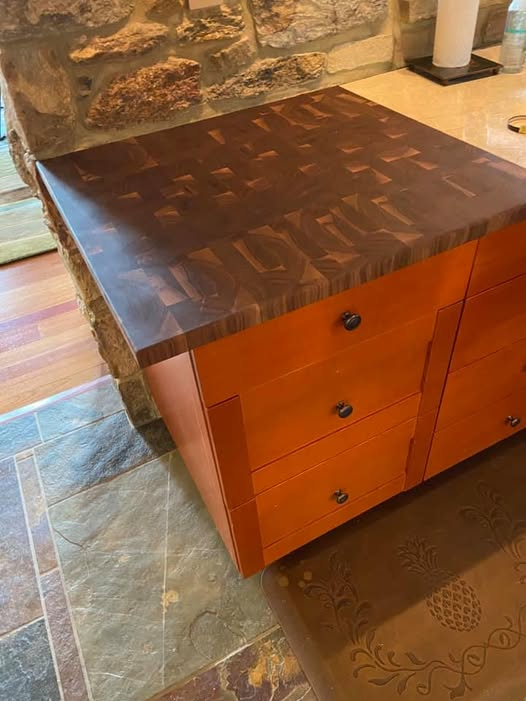
End-grain vs edge-grain.
End-grain tops — the classic butcher block — stand the wood fibers on end. Knives slip between fibers rather than cutting them, so edges stay sharp longer and small nicks close up on their own. Edge-grain tops lay strips on their side; they move less across seasons and read cleaner on a long island run.
A common answer for a real working kitchen is both: an edge-grain perimeter with an end-grain insert where the cook actually chops.
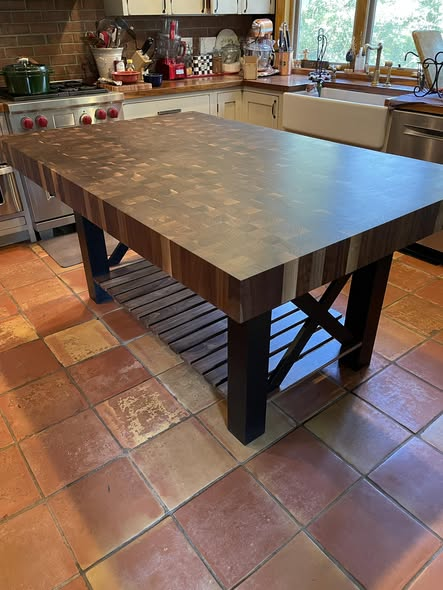
Species that earn their spot.
Hard maple
The default butcher block for a reason — dense, tight grain, light color that shows food clearly. Takes an oil finish beautifully.
Walnut
Dark, warm, and unbelievably forgiving — scratches disappear into the grain. Softer than maple but plenty hard enough for a working kitchen.
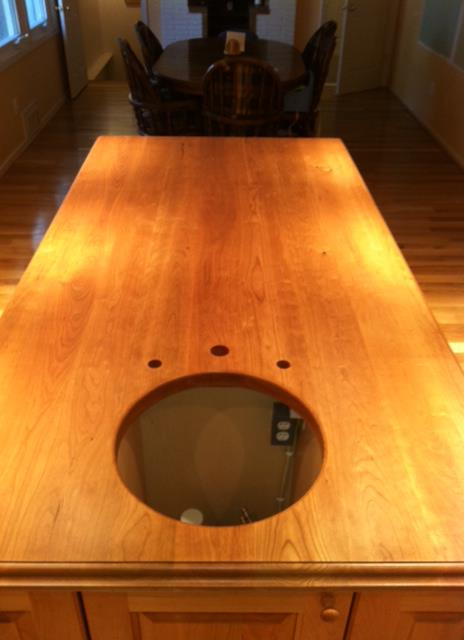
Cherry
Starts pale pink and deepens into a rich amber over the first year. Best on perimeter counters and islands where you'll enjoy watching the color change.
White oak
Hard, tight-pored, and water-resistant enough for a bar top or a counter next to a sink. Rift-sawn cuts give the calmest, most modern grain.
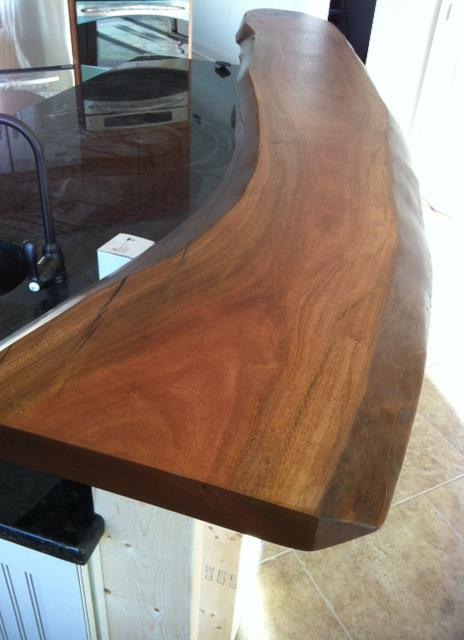
Sapele & mahogany
Deeper red-brown tones with ribbon figure — a great choice when you want a wood top that reads more like fine furniture than a butcher block.
Hickory
The hardest common domestic. High contrast between heartwood and sapwood — bold, rustic, and nearly indestructible.
Finish decides how you'll live with it.
A cutting surface wants a penetrating oil — food-safe mineral oil, a beeswax blend, or a hardening oil like Osmo. You refresh it a few times a year and scratches sand out. There is nothing between your knife and the wood.
A bar top or perimeter counter that will never see a knife wants a film finish — conversion varnish or a good waterborne polyurethane. It resists water rings and wine, but once it wears through, the whole top has to come back to bare wood to be refinished.
Care, honestly.
Wipe spills soon. Don't let water stand at seams, around sinks, or under a drying rack. Re-oil an oiled top when water stops beading — monthly for the first year, then a few times a year for the life of the counter. Sand out scratches with 220 grit and re-oil.
Cared for this way, a solid hardwood top outlives most kitchens it sits in.
Thinking about a wood top?
Send dimensions or a rough sketch and Mike will talk through species, grain, finish, and what will hold up for the way you actually cook.